Passive Income
How to Make Money While You Sleep Online: One Man's Setup
A step-by-step teardown of the exact funnel one solo seller uses to get orders overnight — tools, sequence, and real numbers.
Disclosure: This article contains affiliate links. If you sign up through them we may earn a commission — at no extra cost to you. We only recommend tools we believe are genuinely useful.
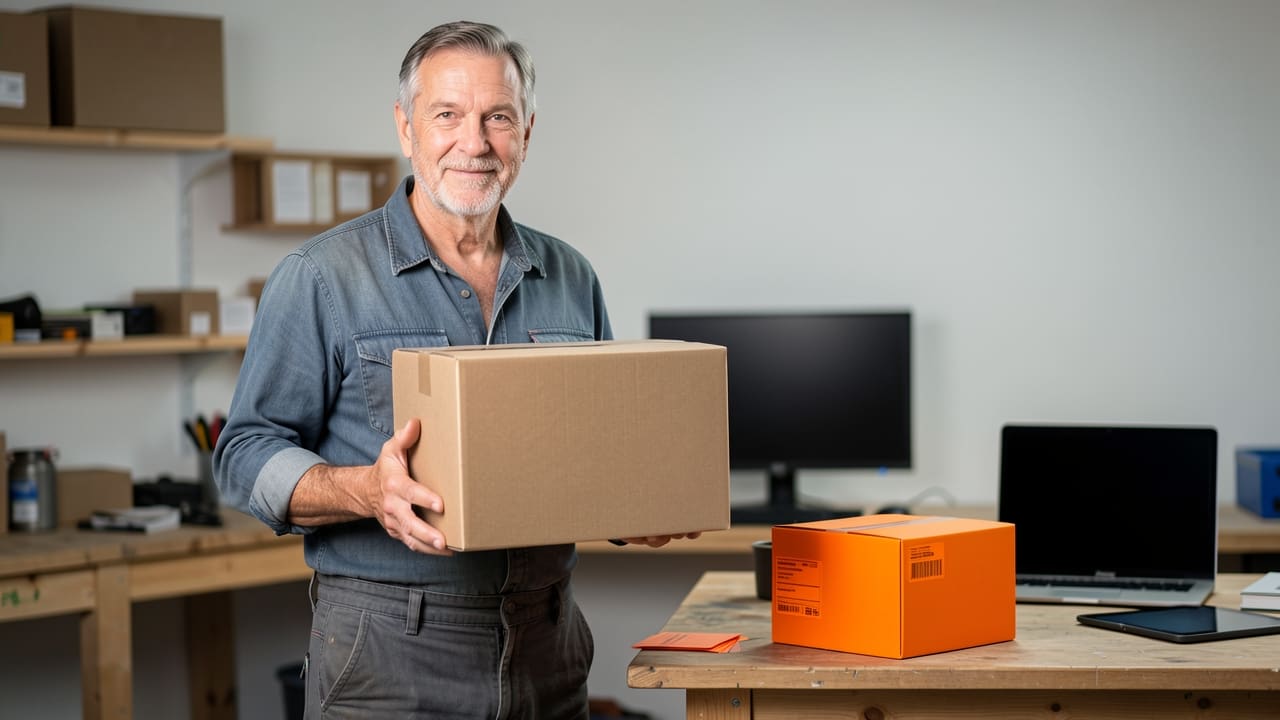
Frank sells laminated fishing-knot charts. That’s it. A niche, slightly odd product he started making after retiring from thirty-one years as a plant supervisor, because he couldn’t sit still and his grandson kept losing his own copy on the boat.
The reason his story is useful isn’t the product. It’s that his shop now takes orders at 2am, 4am, and every hour a person with a normal job isn’t awake to run a cash register — and he built the whole thing with one free-tier tool over a single autumn.
The situation before the fix
Frank’s first setup was three browser tabs and a prayer. He had a product page on one platform, a mailing list on another, and he processed payments by hand, copying names into a spreadsheet so he wouldn’t lose an order overnight. Every sale required him to notice it, package it, and personally reply to the buyer. If he went to bed before checking his email, orders just sat there until morning.
That’s the part people skip when they talk about how to make money while you sleep online — it isn’t that the money appears out of nowhere. It’s that somebody built a system earlier in the day that keeps running after they log off. Frank’s system, before the rebuild, didn’t run without him. It waited for him.
The setup he switched to
Frank consolidated everything into systeme.io, mostly because he was tired of maintaining logins for five different tools that didn’t talk to each other. The new stack had four moving parts:
- A simple landing page offering a free printable knot chart in exchange for an email address
- A five-email automated sequence that taught one knot per day, with the paid laminated set mentioned naturally in emails 3 through 5
- A checkout page connected directly to that sequence, so a click on the offer link went straight to payment
- An automated delivery email that fired the moment payment cleared, with tracking info added the next morning
Nothing in that list is exotic. If you’ve read how a beginner made her first $312 online, the shape will look familiar — small offer, small list, automated sequence. What’s different here is what happens after someone buys at an hour Frank isn’t watching.
What actually happened, step by step
This is a composite of Frank’s actual results, smoothed to a representative month — your numbers will vary with your product and traffic.
In a typical 30-day stretch, roughly 40 people opted in for the free chart. The automated sequence converted about 6 of them into buyers — not from a single launch email, but spread across the five days as each lesson landed in someone’s inbox. Of those 6 sales, 4 came in outside Frank’s waking hours: two at night, two on weekend mornings while he was out.
Each of those 4 sales followed the identical sequence: checkout page processes the card, systeme.io fires the delivery email with the download link, and the order drops into a queue Frank checks once a day. He didn’t do anything for any of those four transactions except set the system up once, weeks earlier.
That’s the actual mechanism. Not “AI that sells for you.” Not a hidden traffic hack. A sequence that keeps making the offer on a schedule, connected to a checkout that doesn’t need a human standing next to it.
The numbers, compared to the old way
| Manual setup (before) | Automated sequence (after) | |
|---|---|---|
| Tools used | 3 separate logins | 1 platform |
| Overnight orders processed | 0 (waited till morning) | Handled automatically |
| Time per sale | ~15 min manual work | ~0 min at time of sale |
| Emails sent per new subscriber | 1, manually, when remembered | 5, automatically, on schedule |
| Monthly opt-ins → sales | Untracked | 40 → 6 |
The table isn’t there to impress you with the size of the numbers — they’re modest, deliberately. It’s there to show where the time went before versus after. The manual column has a human required at every step. The automated column doesn’t.
The mistake that cost him three weeks
Frank’s first version of the sequence tried to sell in email one. Open rate was fine, but nobody bought — because nobody had a reason to trust a stranger’s product yet. He rebuilt it so the first two emails were pure teaching (real knots, real value, no pitch), and the offer didn’t show up until email three, framed as “the shortcut for the five knots I just walked you through.” Sales started the same week.
If you’re building your own version of this and want the mechanics of writing that kind of sequence, this walkthrough on welcome email sequences covers the same principle in more depth than there’s room for here: teach before you pitch, and let the pitch feel like the obvious next step rather than an interruption.
The repeatable lesson
The overnight sales weren’t the result of a bigger list, better ads, or some clever traffic trick. They were the result of removing every step that required Frank to be awake and paying attention. A landing page that captures the lead without him. A sequence that teaches and pitches without him. A checkout and delivery step that closes the loop without him.
That’s the whole model behind making money while you sleep online: not zero work, but work that’s front-loaded into the setup instead of spread across every individual sale. Frank still spends time each week — writing new emails, checking orders, printing labels. What he doesn’t do anymore is stay up to close a sale, or lose one because he went to bed.
He’s now testing a second product, a small waterproof notebook for the same audience, using the identical sequence structure with the middle three emails swapped out. Same system, new offer, same reason it’ll keep selling whether he’s at his desk or not.
Frequently asked questions
- Is it actually possible to make money while you sleep online?
- It's possible, but it isn't passive from day one — it's the payoff of automation you build while awake. Once an email sequence, a checkout page, and a delivery step are connected and tested, they keep working on their own overnight, on weekends, and while you're doing anything else.
- What's the fastest way to start making money online while you sleep?
- Start with one product and one automated email sequence tied to a checkout — not five tools stitched together. A single lead magnet that feeds a short evergreen sequence, ending in a specific offer, is enough to generate its first overnight sale far faster than a complex multi-platform setup.
- How much money can you realistically make online while you sleep?
- It depends entirely on the offer and the traffic feeding it, so treat any specific number you see online as one data point, not a promise. The composite example in this article made a modest amount from a handful of automated overnight orders, which is a more typical starting range than the six-figure screenshots that circulate.
- Do I need a big email list before I can make money while I sleep?
- No — a small, engaged list connected to a working sequence will outsell a large, cold one. What matters more than list size is whether the emails after signup actually lead somewhere: a specific offer, at a specific moment, automatically.
Keep reading

7 Passive Income Ideas for Beginners With No Money
Seven realistic passive income ideas for beginners with no money, plus the exact first step to start each one today.
Read →
How Maria Made Her First $312 Online: A Beginner Teardown
A real beginner's 6-week path to her first online dollars, torn down step by step — copy the setup, skip the guesswork.
Read →
Best Email Marketing Software for Beginners: One Setup, Torn Down
A beginner's real setup, torn down: what she picked, what she skipped, and why the software mattered less than the sequence.
Read →