Audience Building
7 Ways to Build an Online Audience From Scratch (Skip Daily Posting)
No followers, no list, no problem. Seven practical ways to build an online audience from scratch without posting daily. See which one to start with today.
Disclosure: This article contains affiliate links. If you sign up through them we may earn a commission — at no extra cost to you. We only recommend tools we believe are genuinely useful.
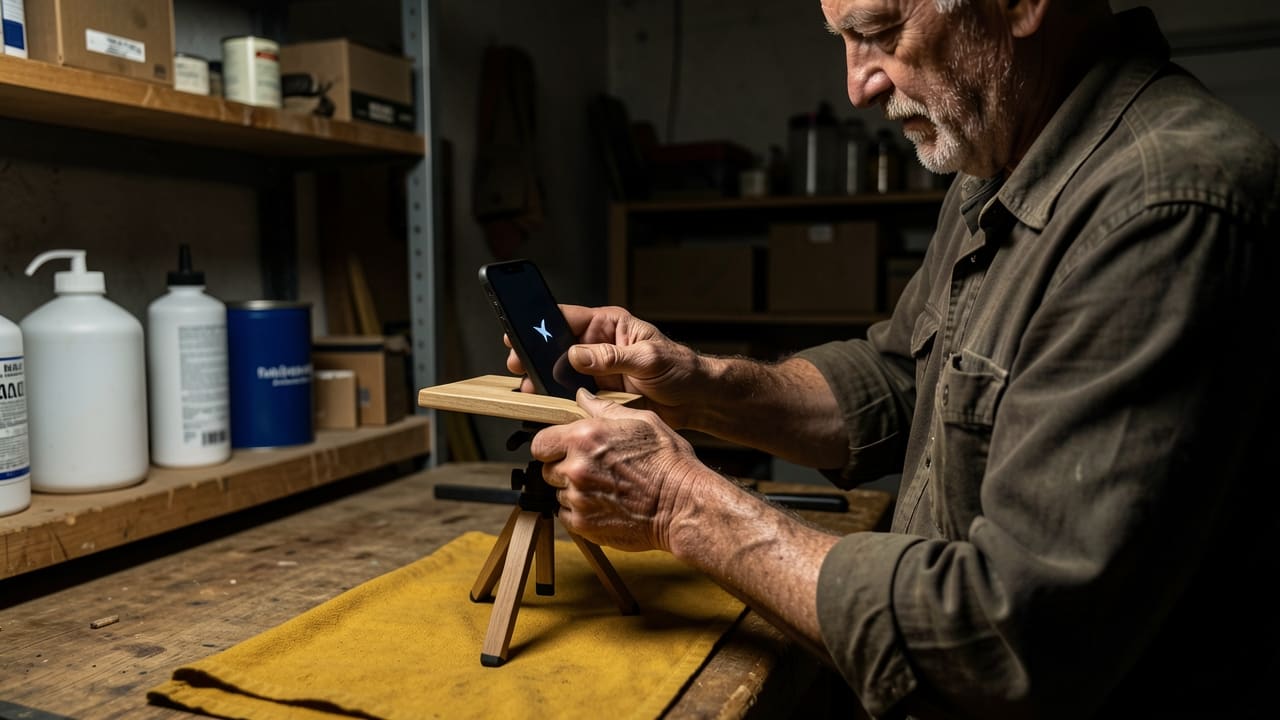
A man in his fifties, a few weeks out of a thirty-year career, props his phone on a tripod in the garage and films a one-minute demo of the thing he knows better than anyone. Nobody is watching. No followers, no list, no reputation. That is what it actually looks like to build an online audience from scratch, and it has very little to do with going viral. It has everything to do with making a small number of people glad they showed up.

Why starting from zero is an advantage
Having no audience means having no expectations to live up to. You can pick a narrow promise, test it, and change it without confusing anyone. The seven moves below are built for that position: low budget, low follower count, and a lot of patience.
7 ways to build an online audience from scratch
-
Pick one person and one problem before you pick a platform. “Everyone who wants to make money online” is not a reader; “a recently laid-off machinist who wants to sell plans for the furniture he builds” is. Write one sentence that finishes “I help ___ do ___ without ___.” Every post, video, and email after this gets easier because you know who you are talking to.
-
Make the thing in public, not just advice about it. A person filming a product demo, photographing a finished piece, or recording a walkthrough is more believable than a person describing theory. Process content shows your standards, your mistakes, and your taste, which is exactly what strangers use to decide whether to trust you. It also hands you material for free: you were going to do the work anyway.
-
Give people a reason to leave the platform. Followers belong to the app; subscribers belong to you. Offer one small, specific thing, such as a checklist or template, in exchange for an email address, and make sure it solves a single problem. If you need help shaping it, how to create a lead magnet that converts covers the common failure points. An all-in-one tool like systeme.io lets you build the signup page and the first email on a free plan, so this step costs time, not cash.
-
Publish where one piece can become five. Record a ten-minute walkthrough, and you also have a short clip, a few quotes, a checklist, and the outline of an email. Repurposing is not laziness; it is the only way a one-person operation stays consistent for months. Choose one main format and let the rest be by-products.
-
Be useful in other people’s rooms first. Spend twenty minutes a day answering real questions in communities, comment sections, and forums where your reader already hangs out. Be specific, give the actual answer, and skip the link unless someone asks. People click through to profiles of those who helped them, and that is a warm introduction you cannot buy.
-
Ask your first ten people for one thing. When someone joins, reply personally and ask what they are stuck on. Their answers become your next piece of content, and the exchange turns a name on a list into a person who recognises you. Early on, this one habit teaches you more than any analytics dashboard.
-
Measure replies, not reach. Views and impressions feel like progress but say nothing about whether anyone cares. Count signups, replies, and saves instead. If you want to see how small lists get to their first milestone, the story in the week I got my first 100 email subscribers is a useful benchmark for what early traction looks like.
What this looks like in practice

Here is an illustrative walk-through. A retired machinist picks one reader: hobbyists who want to build their first workbench. He films a short build clip a few times a week, offers a one-page materials checklist as a free download, and replies to every person who signs up. After two months he might have around 60 subscribers and a dozen real conversations, and those conversations tell him exactly which plan to sell first.
This is a composite example, not a specific customer; your numbers will vary.
Notice what he did not do: chase every platform, post daily, or buy followers. He picked a person, showed his work, and collected addresses.
Common mistakes that stall an audience
Most stalled audiences fail from spreading thin, not from lack of talent. Posting on five platforms with a vague topic produces five empty profiles. Another trap is waiting until the product is perfect; people join an audience for the journey, so start sharing while it is still rough. And if you never ask for the email address, you are renting every follower you earn.
Your next move
Do three things today, in this order. Write your one-sentence promise for one specific reader. Film or photograph one piece of the work you are doing right now and publish it. Then set up a simple signup page with a single free download so the next person who likes it has somewhere to go. Within a week you will have your first real data: who clicked, who joined, and who wrote back. Answer that first reply by name.
Frequently asked questions
- How long does it take to build an online audience from scratch?
- It depends on how often you publish and how narrow your topic is, so any fixed timeline is a guess. A realistic early milestone is your first handful of people who reply or subscribe, which comes from consistent, specific work. Track that rather than follower counts.
- Do I need a big social media following to start?
- No. A small group of people who open your emails and answer your questions is worth more than a large, silent following. Social platforms are useful for being found, but the goal is to move people to something you own.
- What is the best platform to build an audience on?
- Pick the one where your specific reader already spends time and where you can stand to make content for months. Short video suits visual how-to topics, while text platforms suit opinionated explainers. Whichever you choose, give people a way to join your email list.
- Can I build an audience without showing my face?
- Yes. Many creators show their hands, their product, or their screen recordings instead. What builds trust is a consistent point of view and real, specific work, not a face on camera.
Keep reading

How to Build a Waitlist Before You Launch (Step by Step)
Launching to silence is the real risk. Here's how to build a waitlist before launch so day one has buyers waiting, not just visitors.
Read →
7 Lead Magnet Ideas for Coaches and Creators (That Convert)
7 lead magnet ideas coaches and creators actually use to turn followers into paying clients — plus what to skip.
Read →
Free Alternatives to ClickFunnels: 5 Options Compared (2026)
Skip the monthly funnel bill. See which free ClickFunnels alternatives can actually sell, where each one breaks, and which is worth starting on first.
Read →